

IEM.1-5 Aquatic Palynology: dinoflagellates, palynofacies analysis
Instructors: K. KoulΙ; E. Stathopoulou; E. Fatourou
SEMESTER: 1st
LEARNING OUTCOMES
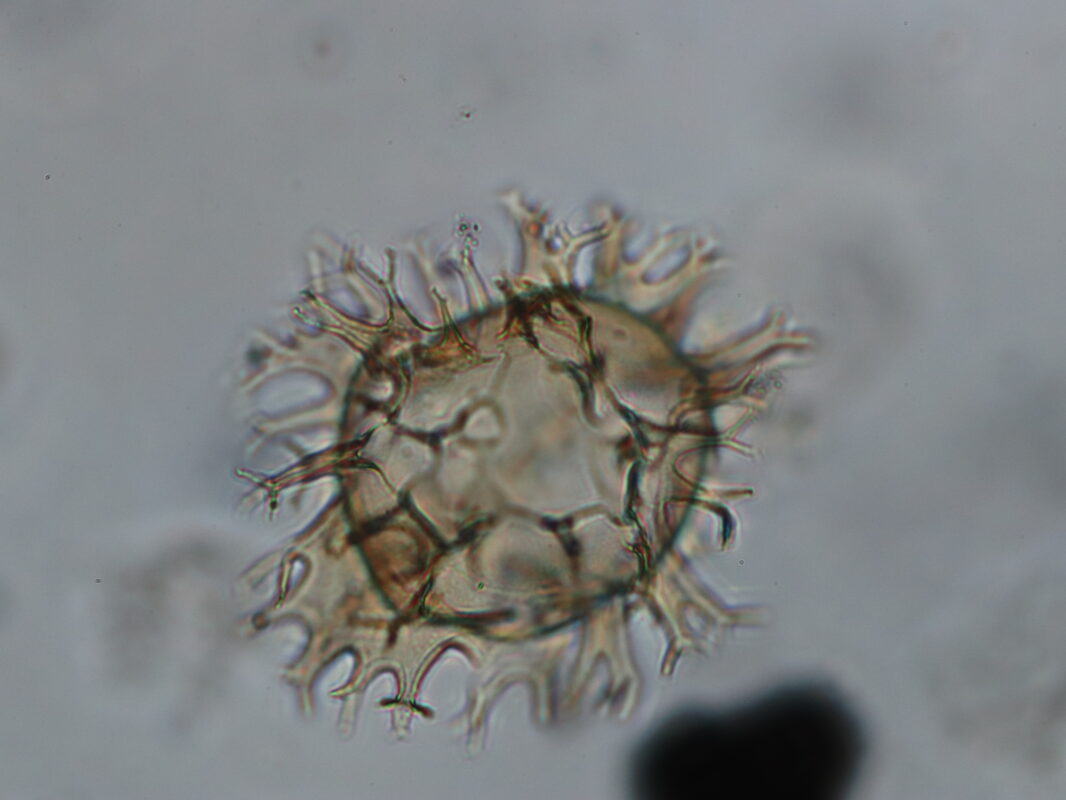
The course deals with the study of the morphology, taxonomy, biostratigraphy and paleoenvironmental significance of dinoflagellate cysts and green algae.
CONTENT:
Theoretical content (lectures).
- Introduction to Palynology, preservation of organic walled microfossils, the palynomorph concept.
- Introduction to dinoflagellates: biology, life cycle, Taxonomy, geographic distribution/ecology
- Organic walled dinoflagellate cysts: cyst morphology, biostratigraphy, paleoecology, significance as paleoenvironmental indicators
- Aquatic organic walled microfossils (achritarchs, chitinozoans, green algae): morphology, ecology/paleoecology, paleoenvironmental and biostratigraphic applications
- Statistical analysis and interpretation of palynological assemblages, stratigraphic correlations, paleoenvironmental applications (salinity, temperature, paleodepth).
- Palynofacies analysis: organic matter classification, thermal maturity, kerogene types. Application to hydrocarbon research
- Harmful Algae Blooms (HABs): dinoflagellate ‘red tides’, biological features, impacts on marine foodwebs.
Β. Practical exercises:
- Palynological processing laboratory techniques
- Comprehensive microscope lab sessions
- Quantitative biostratigraphic methods and data statistical treatment
- Quantitative environmental reconstructions
- Biostratigraphic exercises and hands-on applications
BREAKDOWN OF WORKLOAD
| Activity | Semester Workload (hours) |
| Face to face (in lectures and practical exercises) | 39 |
| Using computers, tablets, smartphones and specialized software (in lectures and practical exercises) | 10 |
| Practical exercises (laboratory, microscope) Laboratory exercises | 39 |
| Questions and Answers | 10 |
| Homework – includes preparation for final examinations | 27 |
| Total | 125 |
STUDENT EVALUATION/GRADING
The evaluation process is conducted in English, either with progress in separate sections of the material or with the final examination of the whole material and includes:
I. LECTURES (50%)
- Oral Examination and/or
- Written exam with short answer questions and Multiple choice test and/or
- Written examination with extended answer questions and/or
- Scientific presentation in a specific topic related to the subject of the course
II. PRACTICAL EXERCISES (50%)
- Written examination with exercises and problem solving
SUGGESTED LITERATURE
- Traverse A. 2007. Paleopalynology. Springer Ed ISBN 978-1-4020-5609-3
- Tyson R.V. 1995. Sedimentary Organic Matter: Organic facies and palynofacies. Chapman & Hall. ISBN 978-94-010-4318-2
- Marret F., O’Keefe J., Shumilovskikh L., Pound M., Osterloff P. 2021. Applications of Non-pollen Palynomorphs: From Palaeoenvironmental Reconstructions to Biostratigraphy. Geological Society. ISBN 978-17-862-0541-4
- Shumilovskikh L.S., Shumilovskikh E.S., Schlütz F., van Geel B. 2022. NPP-ID – Non-Pollen Palynomorphs Image Database as a research and educational platform. Vegetation History and Archaeobotany, 31, 323-328. DOI: 10.1007/s00334-021-00849-8. https://non-pollen-palynomorphs.uni-goettingen.de/index.html
SCIENTIFIC JOURNALS:
- Review of Paleobotany and Palynology
- Palynology
- Micropaleontology
- Marine Micropaleontology
- Revue de Micropaleontologie
- Palaeogeography Palaeoclimatology Palaeoecology
Website:
 English
  Greek
Greek